Table of Contents
About the Organization
The Problem
Dominant approaches to digital technologies are steeped in ideologies of market fundamentalism and have displaced the cornerstone ethics of participation, social justice, and gender equality.
How We're Different
At IT for Change, we believe that progressive development sector actors must come together to influence the techno-social structures that are redefining our societies. We seek to build bridges across different sectors to strive towards a digital society that is equitable.
What We Do
Our work, straddling Data and Artificial Intelligence (AI), Big Tech and Digital Economy, the Digital Public Sphere, Feminist Digitality, Education and Technology, and more, pushes the boundaries of theory and practice to explore new horizons for development justice.
 Mission
 Vision
A society in which digital technologies contribute to social justice and equality.
 Values
Equity, Social Justice, Gender Equality, and Democracy
 Strategies
- Partnering with local communities
- Forging local and global networks
- Undertaking research
- Engaging with policy spaces
- Creating new institutional capacity
A Note from the Directors
IT for Change marked its Silver Jubilee on July 19, 2025—a momentous milestone for us; a journey not only in organization-building but in co-shaping what is seen today as the field of digital justice.
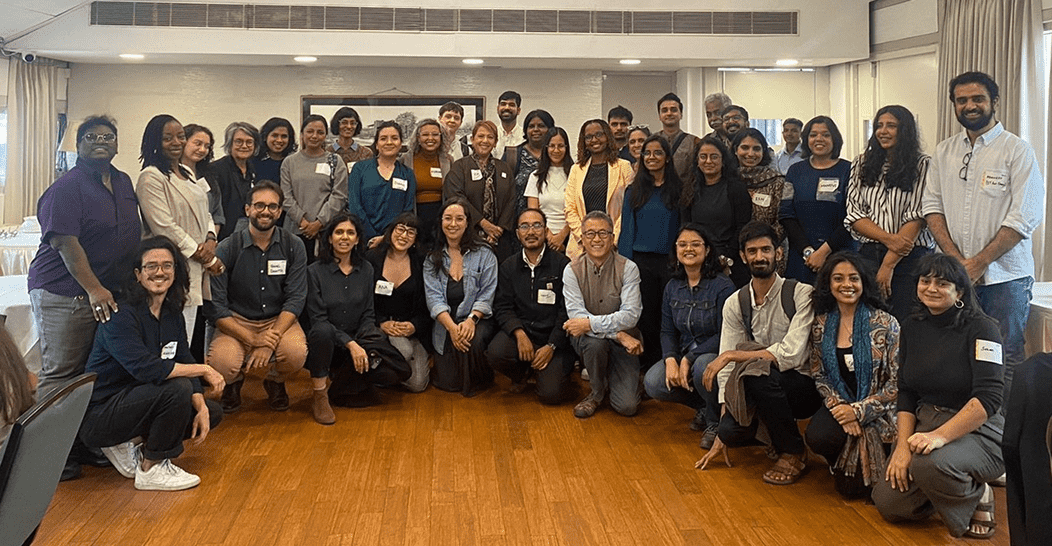
We commemorated the organizational landmark with a befitting convening, Our Digital Futures Fest. A coming together of community and conviction, the series of events at the fest was about looking back with thankfulness, so we can look to the future with hope and resolve. Our peers and mentors were there with our wonderful founding team members and precious families. We recommitted ourselves to the solidarities that have brought us this far and opened our hearts to new generations of thought and thought leaders.
Our Impact
1
Centering Data Justice in Digital Governance
Data governance is increasingly becoming a defining question for development, democracy, and global economic justice. Yet, dominant approaches continue to privilege a narrow, individualist approach to data rights and a market-led notion of data value, often obscuring questions of community autonomy, economic justice, and equitable development. This year, we worked to bring a stronger Global South and data justice lens into the emerging architecture of global data governance.

We moved the needle on data for development at the UN Working Group on Data Governance
In 2025, the United Nations General Assembly (UNGA) tasked the United Nations Commission for Science, Technology, and Development (UNCSTD) with setting up a new Working Group on Data Governance at All Levels to arrive at the foundational international norms on data governance. The Working Group is a historic first step of the UN system to produce a report with key recommendations for an equitable data governance regime that furthers development. The report of the Working Group will be tabled at the 81st session of the UN General Assembly (2026-2027). The UN CSTD invited our Executive Director, Anita Gurumurthy, to serve on the Working Group as a civil society representative.
Our submissions to the Working Group highlighted the intrinsic connection between data justice and development autonomy. We argued against glib framings of ‘free data flows with trust’, underlining that trust in the international order is in fact an outcome of just economic rules. Our inputs pointed to unequal starting points for developing countries– emphasizing asymmetries in digital infrastructural capabilities and cautioning against neo-colonial narratives of ‘free’ data flows. We emphasized the sovereign right of all communities and nations to govern their data commons, even as they integrate themselves into global value chains on their own terms. We also forged a research network to dive into the sectoral insights on data justice from domains such as food sovereignty, biodiversity, and public health – in order to inform our inputs at the Working Group discussions.
To help civil society organizations, governments and the tech community decode the debates at the Working Group, we shared our insights at several forums. This includes inputs to the Africa School of Internet Governance, learning events of the Open Knowledge Foundation, Diplo Foundation and the Geneva Internet Platform, and FIAN International’s World Summit on Information Society (WSIS)+20 side event on economic, social and cultural rights in the digital age.
Our contributions earned the trust and appreciation of multiple stakeholders – the Chair of the Working Group, other member states from the South serving on the Group, civil society, and technology community observers – for the unique vantage we bring to the discussion.
We advanced a public value framework for national data infrastructure governance
The norms and mechanisms through which data value is produced and distributed in society are vital for the future of development. In the discourse on Digital Public Infrastructures (DPIs), this tends to be a less-visible and less-understood area.
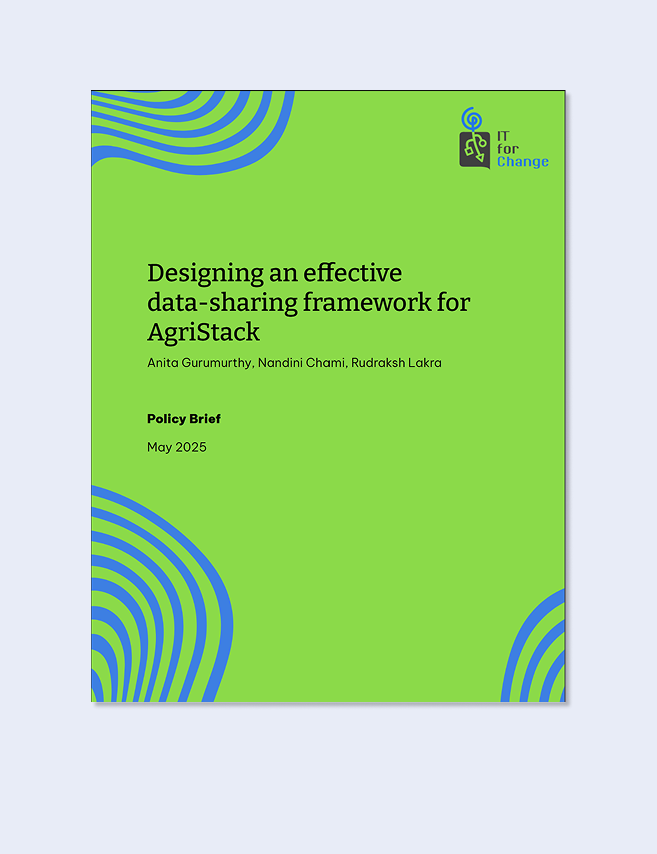
Our research on DPIs in India produced cutting-edge insights on how to effectively govern the data layer of emerging DPIs in the domains of agriculture and health. We provided solicited inputs on the AgriStack to senior officials in charge of designing its governance framework. We called for safeguards to prevent data harms in downstream uses by the market, and licensing conditionalities to ensure that public value is preserved in third-party data sharing.
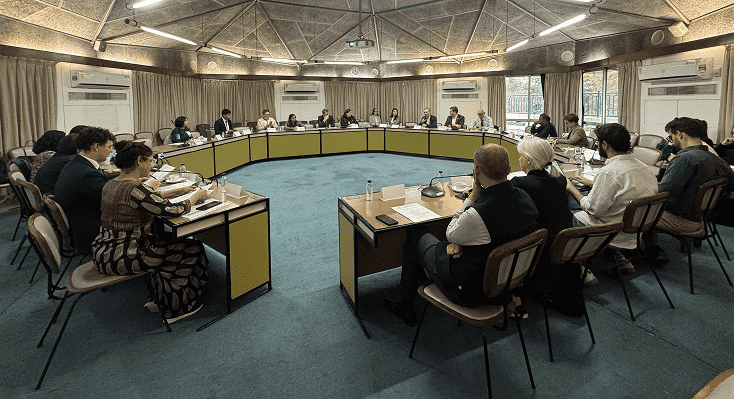
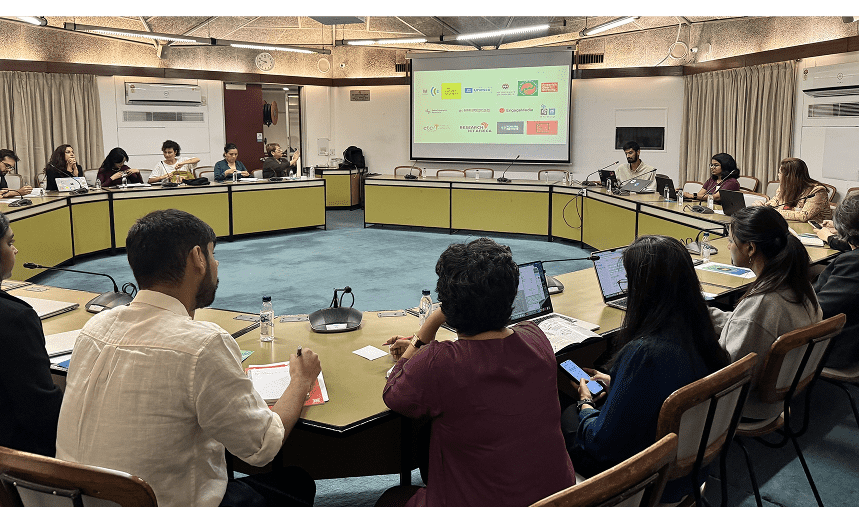
At the India AI Impact Summit 2026, we convened a timely multistakeholder roundtable on safeguarding data agency in DPI and AI innovation ecosystems, along with the Government of Australia, Project Liberty Institute and the Global Solutions Initiative. This event enabled a vibrant exchange of perspectives among government, civil society, and private sector representatives from different parts of the world. Discussions focused on furthering data frameworks for DPI rooted in public accountability and public value maximization.
We continued to push for data justice as a critical agenda for the G20
Realizing the goal of data justice calls for an agenda that includes the socio-political dimensions of data as a resource. How do we build and govern data-enabled global production systems differently? How do we envision Artificial Intelligence (AI) value chains for development justice? These are key questions. As always, the concentration of geoeconomic and geopolitical power and the entrenchment of inequality need to be addressed as starting points in the quest for justice. Today, the governance of datafication becomes central to how the very future of macroeconomic transformation is imagined.
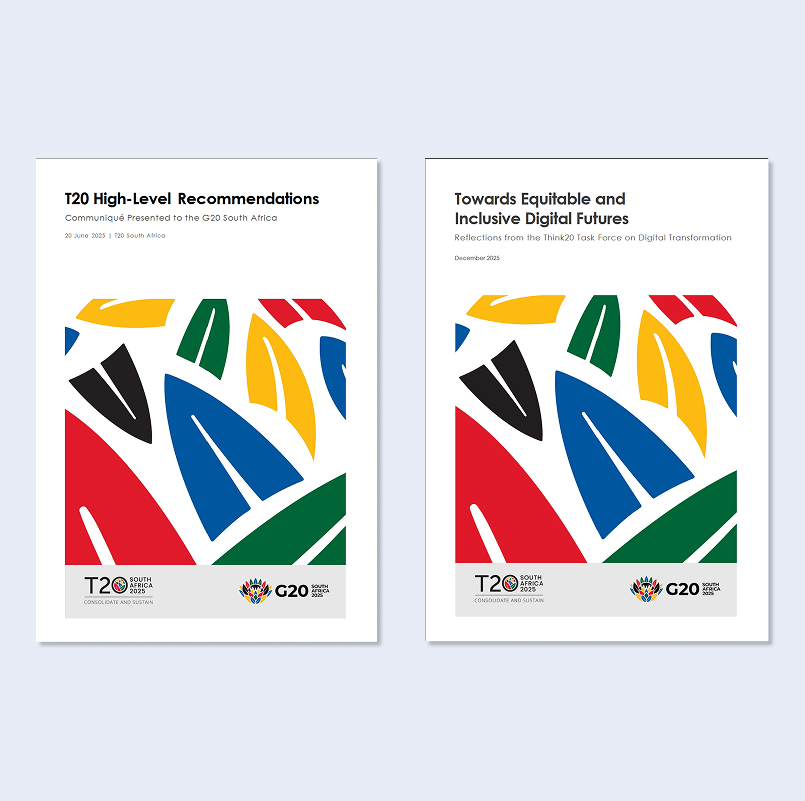
At IT for Change, we have consistently brought a structural perspective on data justice into our engagements. At the G20 process in 2025, Anita Gurumurthy was appointed as co-lead of the Think 20 (T20) thematic on Digital Transformation, where she promoted such a ‘whole-of-economy’ perspective to data and AI governance debates.
We authored two policy briefs under Task Force 01: Trade and Investment and Task Force 02: Digital Transformation. Our perspectives also found mention in the final T20 communiqué submitted to the G20 South Africa. Further, in the civil society document Reflections from the Think20 Taskforce on Digital Transformation’, the complement to the official T20 communique, we stressed the need for the G20 to take a holistic data governance approach–one that works for all countries and peoples.
2
Promoting an AI Paradigm that is Regenerative
The rapid expansion of AI is intensifying the concentration of economic and technological power. For the Global South, the challenge is not simply to participate in an AI economy designed elsewhere, but to ask what kinds of AI systems, institutions, and innovation pathways are compatible with human rights, social justice, and ecological sustainability.
This year, we advanced a regenerative alternative to the extractive dominant AI paradigm — one that places human flourishing and planetary well-being at the heart of AI governance.
We built a normative lexicon
on regenerative AI
The India AI Impact Summit (Feb 2026) afforded an opportunity to bring civil society from across the world to deliberate upon and influence official visions of AI and civilizational futures. We planned a series of milestones for consensus-building among civil society to sharpen our messaging.
Our first set of dialogues was in October 2025 — an event titled, ‘Towards Regenerative AI: Frames for Inclusive, Indigenous and Intentional Innovation'. The event was accredited as an official pre-summit event by the Ministry of Electronics and Information Technology, Government of India. The event’s key messages were covered in The Hindu and Deccan Herald. With participation from over 45 researchers, practitioners and policymakers from India and across the world, the animated discussions culminated in a ‘New Deal for the AI Economy’.
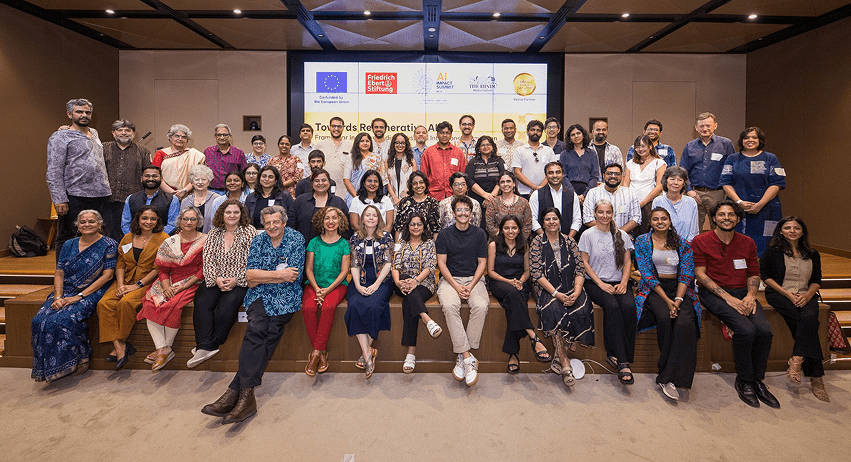
The New Deal is a four-pronged roadmap for ‘ReGen AI’, outlining pathways for a digital future of meaningful and dignified work, diversified economies, pluralistic knowledge societies, and planetary flourishing. In the subsequent months, up until the India AI Impact Summit in February 2026, we relayed key messages from the ReGenAI roadmap to consultations organized by the Government of India to receive inputs on the themes for the Summit.
Our effort to build a strong civil society perspective on AI governance culminated in an important roundtable–‘AI Governance from the South: Redlines to baselines’–on the sidelines of the Summit. Together with the Ada Lovelace Institute, Future Society, and other members of the UNESCO Global Civil Society Network on AI ethics, we brought 40 leading voices who deliberated upon and articulated an entry point that goes beyond AI harm debates, defining non-negotiable baselines for structural justice.
We underlined the urgency of a just economic order at the 20th-year review of the WSIS
2025 marked the 20th-year review of the World Summit on the Information Society (WSIS), the primary framework under the UN umbrella for digital technologies and development. We were actively involved in multiple civil society campaigns to center a Southern vision of digital justice in the WSIS review process and the outcome document.
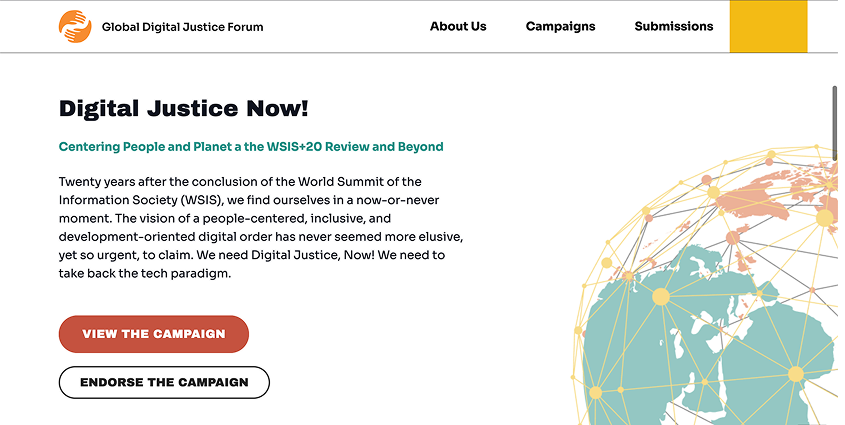
In partnership with members of the Global Digital Justice Forum (GDJF)–a Southern civil society coalition of over 45+ organizations that we are a part of–we led a campaign towards the WSIS review, calling for ‘Digital Justice, Now!’. The campaign’s key demands included a just international economic order based on the principle of digital non-alignment and a sustainable digital transition that safeguards the human rights of future generations. Over 100 civil society organizations and individuals across the world endorsed it.
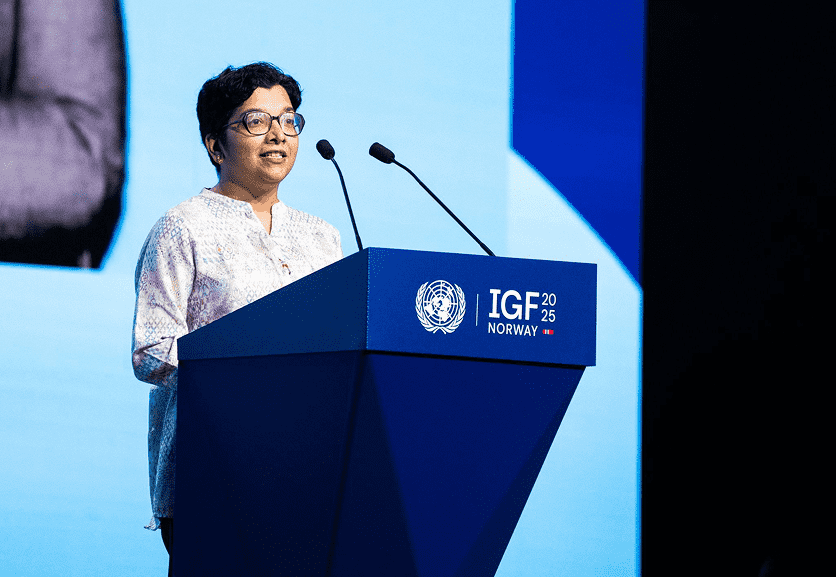
At the 2025 Internet Governance Forum (IGF) in Norway, we conducted a briefing session for governments–along with other members of the GDJF — calling for a reform of global architectures of corporate taxation and development financing. We reiterated this message through our official side event at the WSIS+20 Review. At the event, we emphasized the importance of public financing mechanisms for digital innovation, and shaped the commitment for the establishment of a task force on financing in the Outcome Document adopted by the UNGA.
Our thought leadership at the WSIS+20 review was also recognized when IT for Change was selected as a civil society speaker at both the Opening Plenary of the IGF, July 2025, and the WSIS Plenary of the UN GA 80th session, December 2025. Our interventions in both forums urged governments and other actors to address injustices of international economic law–trade, tax, and IP regimes–to ensure that AI economies and societies bring progress and prosperity for all.
We shifted the framing from ‘copyright’ to ‘public domain’ in GenAI debates
Through UNESCO’s Global CSOs & Academic Network on AI Ethics & Policy, IT for Change provided leadership to the thematic Subgroup on AI, Culture and Intellectual Property. We moved the conversation on GenAI and copyright reform, drawing attention to the societal dimension of the crisis. The research we conducted through expert informant interviews in Asia and Africa, and the roundtable we organized on this issue at the India AI Impact Summit in February 2026, pointed to how the Intellectual Property (IP) reform narrative is inadequate to protect cultural rights and development autonomy in the AI moment.
Through our work with the Subgroup, we posited new infrastructural and institutional pathways for a flourishing knowledge commons. We shifted the emphasis from individual creator rights to the wider question of the ‘public domain’ as a critical but missing dimension.
We joined the dots between labor rights and platform accountability through our vital role in shaping the ILO resolution on platform work
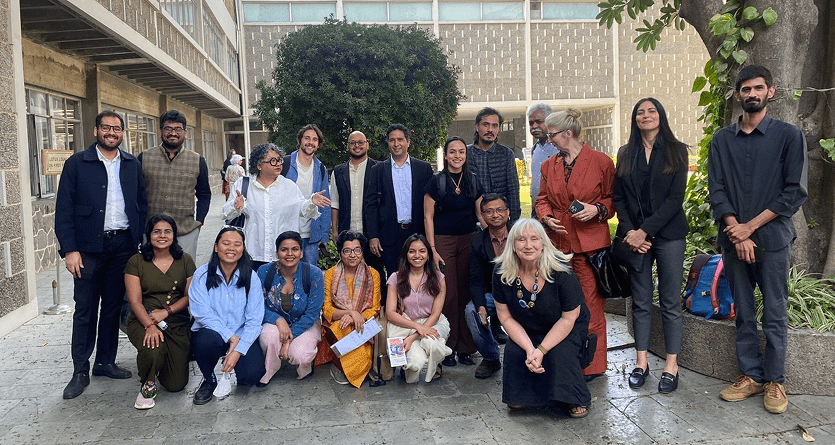
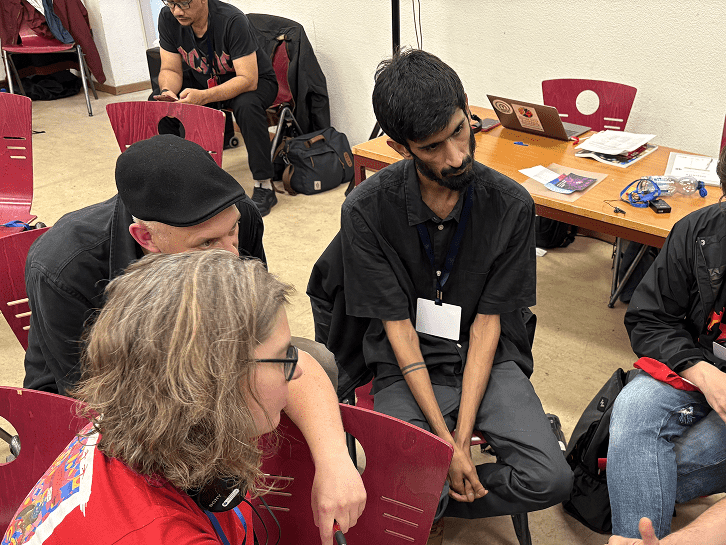
The 113th session of the International Labour Organization (ILO) Conference in June 2025 focused on the critical issue of decent work deficits in the platform economy.
In the lead-up to the Conference, we produced knowledge outputs on foundational labor guarantees in platform work arrangements to further algorithmic transparency and data rights, and address misclassification of employment status. We actively furthered this agenda at the 113th International Labour Conference through our engagements with worker organizations, social impact investors, civil society, and governments.
3
Strengthening Education Systems Through Public EdTech and Critical EdTech Discourse
This year, we deepened our work to demonstrate how technology can strengthen public education when it is rooted in teacher agency, contextual learning, and equity. We took our audio-story pedagogy to scale across Karnataka, and extended the approach to anganwadi settings in Jharkhand and Odisha, while also building a stronger critical conversation on EdTech in India. We invested in the communities and capacities needed to sustain these approaches — demonstrating that meaningful digital transformation in education is not about the adoption of technology alone, but about equipping educators and building public institutions capabilities to use technology meaningfully.
We scaled language learning through teacher-led audio pedagogy across Karnataka
By building institutional capacity within the public education system, our Karnataka Language Enrichment through Audio Story-based Pedagogy (K-LEAP) program is demonstrating how teacher agency can be the foundation for meaningful and sustainable technology integration at scale.
The program scaled statewide through techno-pedagogy workshops for around 100 Master Resource Persons (MRPs) from all 35 districts of Karnataka. The workshops enabled the trainees to integrate‘Kathe Khajane’, the audio bank of stories developed by IT for Change, into classroom teaching for English language development.
The program’s emphasis on teacher-led creation and use of contextualized audio resourcescatalyzed several district-level cascade workshops and resulted in wide adoption through app installation and integration of the Kathe Khajane audio stories into classroom teaching.
We expanded our audio-story creation program to new languages in Jharkhand and Odisha
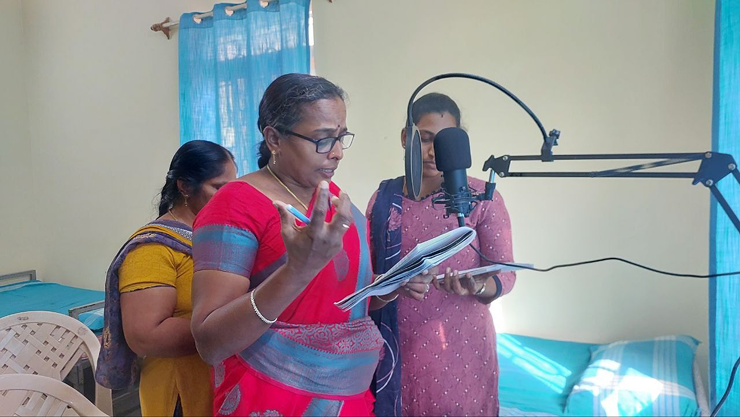
The foundation of inclusive education is recognizing linguistic diversity in the classroom as an enabler, rather than a barrier, in early language learning. Our audio-story creation program works with local languages and community resource persons to develop contextually relevant learning resources.
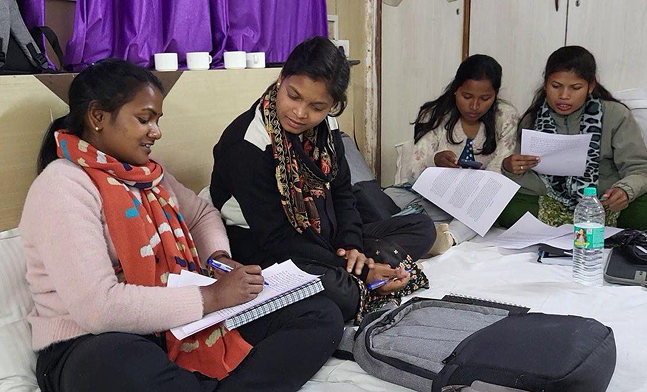
In partnership with Collectives for Integrated Livelihood Initiatives (CInI), we launched the Odisha Language Enrichment and Application Program (O-LEAP) alongside Phase II of the Jharkhand Language Enrichment and Application Program (J-LEAP). We trained more than 30 resource persons from anganwadis across the two states in scripting, narrating, recording, and editing audio stories. The workshops produced around 90 stories in Odia, 25 in Sadri, and 35 in Hindi, building on the existing repository of audio stories in the Mundari language created earlier. These outputs demonstrate the maturating of our Teacher Professional Development(TPD)-Open Educational Resources (OER) model.
Participants demonstrated strong ownership, learned collaboratively, iteratively refining their work through peer feedback. They overcame initial challenges in narration, language standardization, and technology use, steadily building confidence and technical competence.
We built a community for Critical EdTech in India
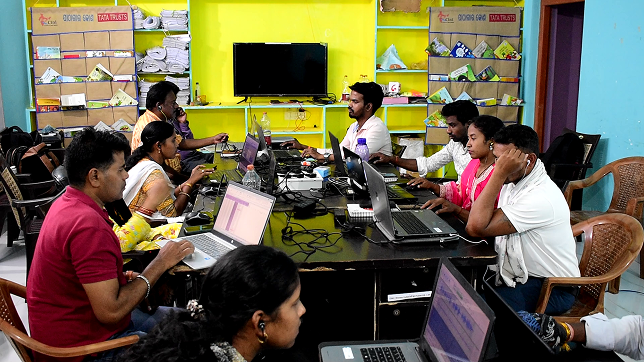
This year, we launched the Critical EdTech India (CETI) community and began serving as its secretariat. Bringing together 120+ educators, scholars, EdTech practitioners, and academics, CETI provides a sustained space for examining EdTech through a critical, reflective, and ethical lens.
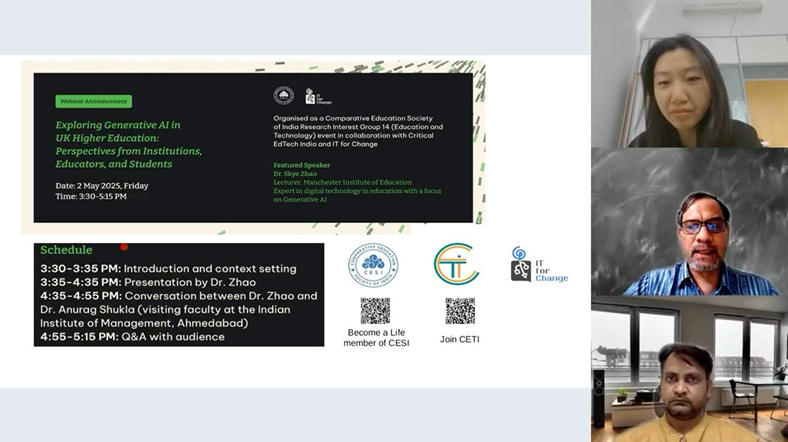
We co-organized two webinars with CETI and the Comparative Education Society of India (CESI): 'Exploring Generative AI in UK Higher Education: Perspectives from Institutions, Educators, and Students' and 'Digital Platforms, Massification and Individualization of Inequalities in Higher Education.'
The community builds on our long-standing effort to strengthen teacher agency and challenge technology-first approaches to education. By connecting diverse actors working across research, policy and practice, CETI is laying the foundations for a collective agenda on the implications of EdTech for equity, access, educational autonomy, and public policy.
As part of our 25-year celebrations, we convened a conference on ‘EdTech for Equitable Education: Critical Conversations’ in collaboration with CETI. The day-long event brought together practitioners, academics, technologists, civil society organizations, and policymakers to share field experiences, deconstruct dominant narratives, and collectively reflect on how EdTech can contribute to equitable education.
By bringing together diverse voices to examine both the possibilities and pitfalls of digital technologies in education, the conference helped strengthen the EdTech discourse in India — one that places educational purpose, equity, context, and public value at the center of technology adoption. The conference received coverage by The Hindu and Education World.
4
Demonstrating feminist pathways to digital transformation
This year, we made significant strides in shaping feminist pathways for digital transformation through our interventions with adolescent girls in schools and communities. Deepening feminist practice within institutions and creating spaces for collective reflection on gender equality in a digitalizing world, our efforts sought to combine community intervention, discursive shift, and collective solidarities as key strategies for gender transformation in digital times.
We created empowering spaces for adolescent girls in Karnataka’s schools through Hosa Dishe
Our program Hosa Dishe (New Directions) demonstrates how digital media hubs within the public school system can serve as spaces of empowerment, rights education, and peer solidarity.
With the support of ecosystem actors, our school-based work with adolescent girls strengthened and expanded across Karnataka this year. The Karnataka Residential Educational Institutions Society (KREIS) department recognized the impact of our teacher-led Kishori Clubs in empowering adolescent girls and enabled their expansion to eight districts — Mysuru, Kalaburagi, Raichuru, Chamarajanagara, Mandya, Tumkuru, Hassan, and Chikkamagaluru.
Close to 500 teachers were trained as facilitators, enabling the programme to move from an intensive intervention to a teacher-led model embedded within government schools.
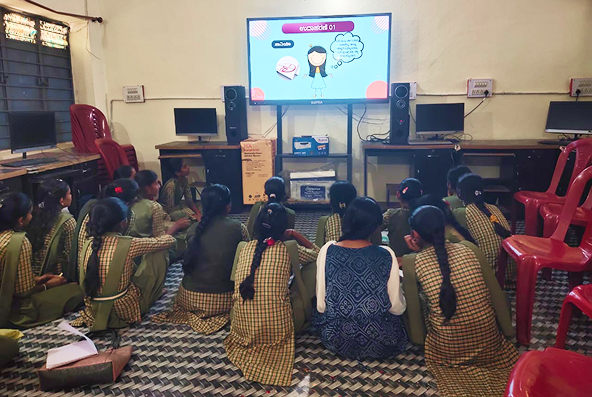
The endline study, ‘Understanding Change’, found that the program’s impact was most visible in “increased articulation, emerging confidence in discussion, and girls’ ability to negotiate gender norms within their social environments.”
We reached around 5,000 parents through IVRS (Interactive Voice Response System) audio messages, encouraging them to support their daughters’ education and well-being. We continued to document and amplify these shifts through the Nan Voice Nan Choice podcasts, providing a platform for adolescent girls’ reflections and experiences throughout the year. On the digital front, our Kishori Adda Instagram handle challenged misogynist narratives through regular posts and four thematic campaigns, garnering nearly 2.4 lakh views over the year.
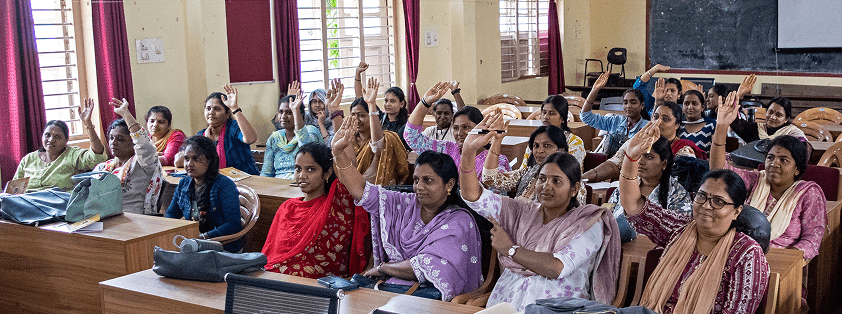
We demonstrated a foolproof model for girls’ empowerment with an intergenerational approach
Our rural interventions in Mysuru seek to build bridges between adolescent girls, and members of women’s collectives in their local communities through digital empowerment pathways.
The Kishori Champions program pilot engaged 44 adolescent girls in Mulluru and Jakkalli villages of Mysuru district. The girls have gained a vocabulary for concepts such as gender, patriarchy, and identity, while developing storytelling, photography, and audio-recording skills to strengthen self-expression and critical thinking, moving from recognition to actively interpreting their own experience.
The activities and assignments created opportunities for girls to negotiate with their families and wider communities for greater mobility and access to public spaces — spaces that are often restricted for adolescent girls. The girls also gained a safe and confidential space to test ideas and work through situations before facing them outside, along with forging trusted relationships with older women in their community who become accessible first responders, often the first adult a girl brings a difficult question to. We worked towards fostering intergenerational solidarity between adolescent girls and women.
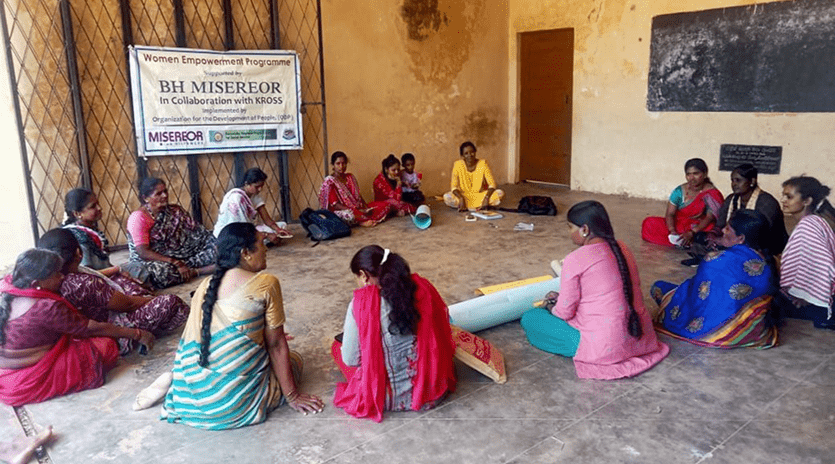
Alongside the work with girls, we facilitated women’s forums, bringing together close to 250 women. The forums created a critical space of dialogue using video learning resources for the women to engage with ideas of patriarchy, collective strength, leadership, financial literacy, and equality, with a strong focus on how they could build support systems for the next generation and champion girls’ aspirations.
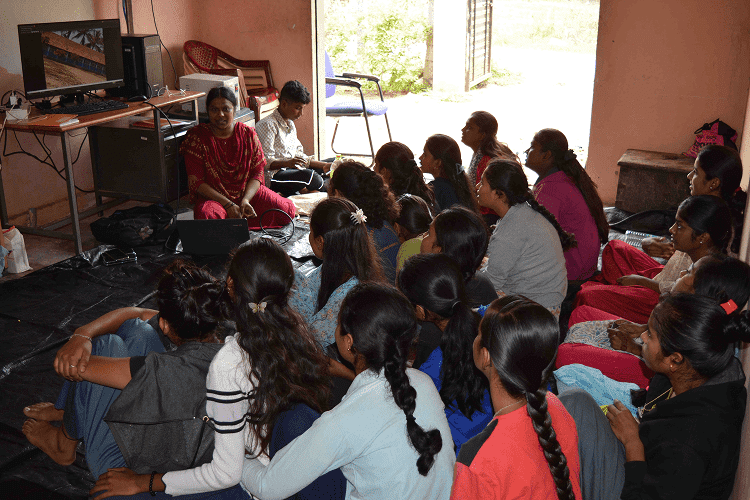
The local Namma Mahiti Kendras — women-led community information centers — remained critical to the implementation and sustainability of both programmes. Their infomediaries played an important role in mobilizing community members, while the centers themselves continued to serve as accessible information hubs and trusted spaces for girls and women to gather, learn, and organize.
We co-built gender-responsive platform models and forged feminist communities of practice
This year, we successfully concluded our five-year project supported by the European Commission, ‘Re-wiring India’s Digitalising Economy for Women’s Rights and Well-being’, that helped create alternative platform enterprise models and build research-based knowledge on gender and the digital economy.
We advised social enterprises and women-led cooperatives on how they can enhance their digital capabilities to advance livelihood opportunities for their women beneficiaries. An independent evaluation found that the initiative “had made a significant contribution in encouraging the organizations to recognize and incorporate into their planning women’s lived experiences, particularly at the technology design level, and also deepen the gender focus in their technology implementation”. The evaluation also found that the knowledge outputs generated through the research fellowships supported by the project had produced cutting-edge insights on the gendered consequences of India’s ongoing digital transformation.
The independent evaluation quotes a fellow from the project observing “that the fellowship had given her 'access to certain rooms' and ways to engage with decision-making groups. Their work, published and disseminated through ITfC’s platforms, gained a level of visibility that they felt they may not have had otherwise”.
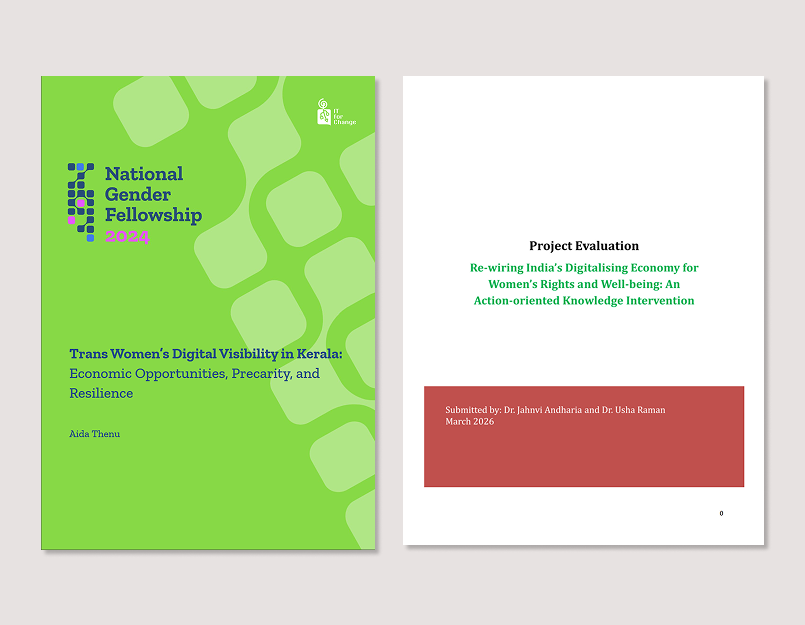
In this way, the project also contributed to field-building through engagements among researchers, practitioners, policymakers, social enterprises, and civil society actors. The evaluation notes that its second objective — building the field on gender and the digital economy — was met both quantitatively and qualitatively, with the research outputs recognized as being of “very high quality.”
The EU project is a validation of our unique approach to feminist digital transformation, straddling gender-responsive techno-design with field-building and communities of practice.
We convened a cross-sector dialogue to reimagine gender equality in a digitalising world
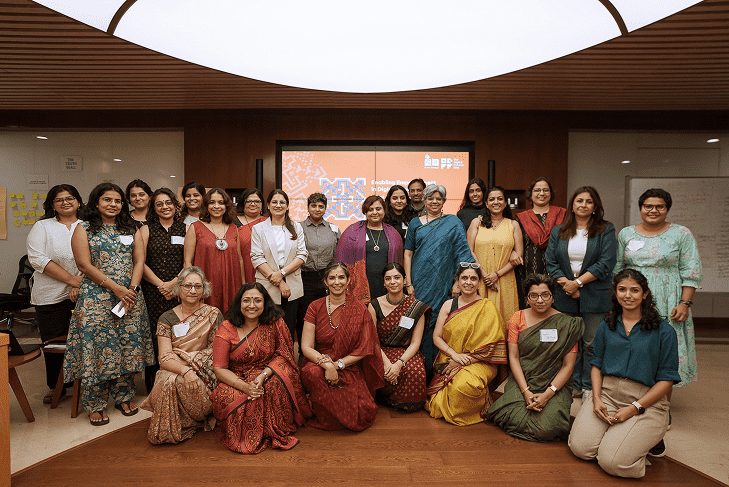
As part of Our Digital Futures Festival, in partnership with Antara Advisory, we convened a critical closed-door roundtable, ‘Enabling Empowerment in Digital Times: What Next for Gender Equality? in Bengaluru. The dialogue brought together 20 scholars, practitioners, policymakers, technologists, and philanthropists to create a space for collective meaning-making and agenda-setting on gender-transformative change in a world being reshaped by digitalization.
The dialogue expanded the idea of the gender digital divide–exploring how macro-social transformations connect with hyper-local realities, where opportunities for shared strategies and levers can enable tactical action. Structured around three pivots — to reflect, rethink, and reboot — the conversation created a cross-sector space to surface shared concerns and imagine pathways towards gender-equitable digital futures.
This small-scale experiment gives us the confidence to build bridging spaces at scale for candid, cross-stakeholder dialogues for productive friction and context-appropriate strategies on feminist digital futures.

Event Highlights
2025-26 was a milestone year. We turned 25 and used the occasion to reflect on our journey so far and envision the road ahead as well. From bringing diverse voices together to advancing key ideas on digital justice.
Our Digital Futures Fest: Celebrating 25 Years of IT for Change
For 25 years, we have worked towards a just and equitable digital world. To mark this milestone, ‘Our Digital Futures Fest’ brought together a special line-up of events spanning 25–31 October 2025 in Bengaluru. From panel discussions and film screenings to roundtables and exhibitions, the event brought together practitioners, researchers, policymakers, technologists, and artists.
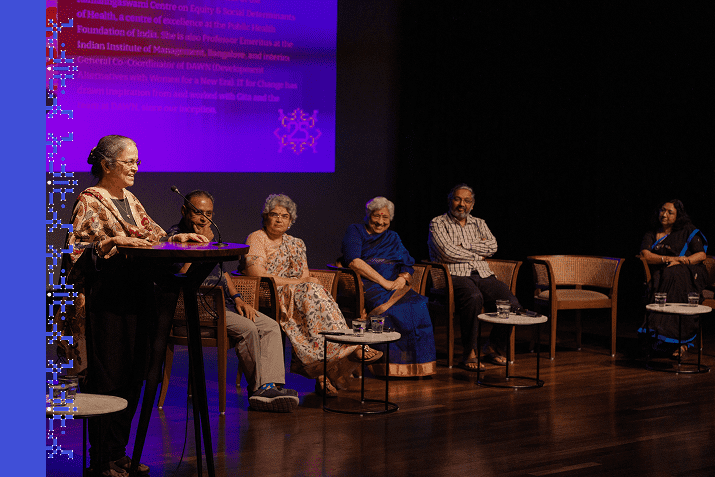
25th Anniversary Celebrations
25 October 2025
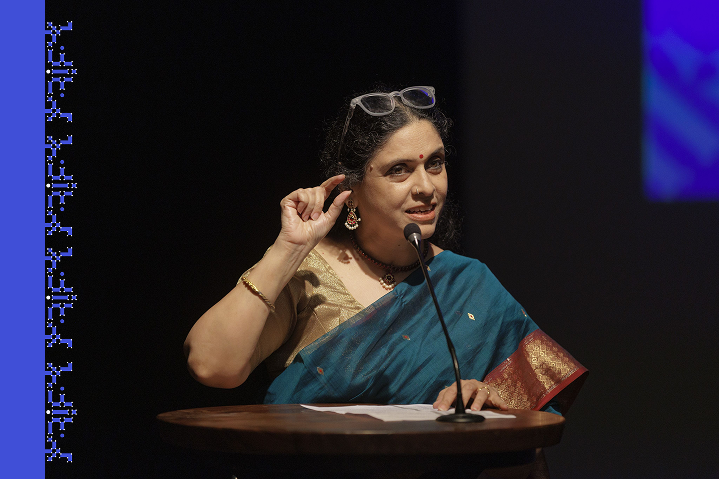
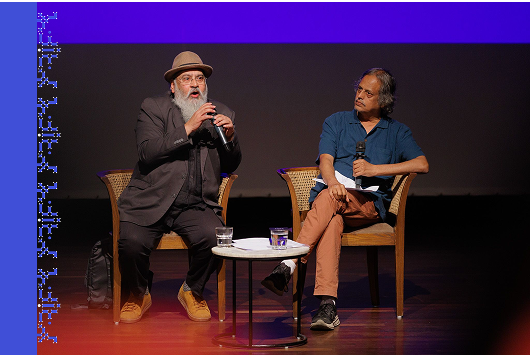
The fest opened at the Bangalore International Centre (BIC) with a public lecture by Dr. Shekhar Seshadri, a renowned child psychiatrist. An organization is built by its people. We celebrated the care, commitment, and contributions of our long-standing employees on this occasion. Employees, members of the board, founding members, and former team members went down memory lane and reflected on their journeys with IT for Change.
Watch the exciting clips from the day here.
Enabling Empowerment in Digital Times: What Next for Gender Equality?
30 October 2025
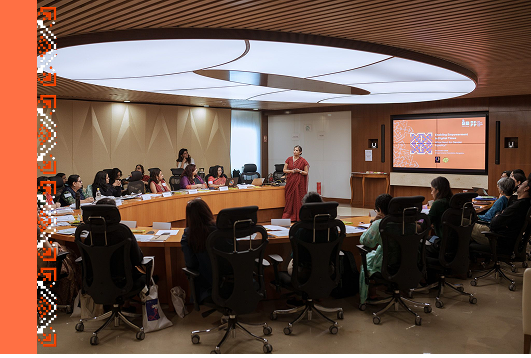
As digitalization reshapes the world, what does gender-transformative change look like? This roundtable, co-convened by IT for Change and Antara Advisory, convened 20 participants — scholars, practitioners, policymakers, technologists, and philanthropists — to explore this question together.
See images from the roundtable here.
EdTech for Equitable Education: Critical Conversations
30 October 2025
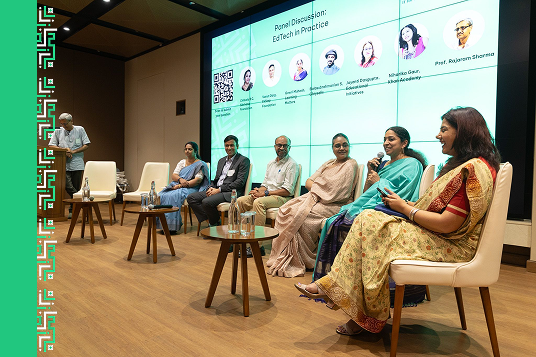
What are the pressing concerns that surround EdTech in India, and what models can we envision for universal quality education? ‘EdTech for Equitable Education: Critical Conversations’ was a day-long conference, organized in collaboration with Critical EdTech India (CETI). The event brought together academics, technologists, civil society organizations, and policymakers to take a deep, critical look at the adoption of EdTech in India.
The keynote by Jian Xi Teng (UNESCO Regional Office South Asia); and a fireside chat with Anvar Sadath (Kerala Infrastructure and Technology for Education, Government of Kerala) and Kavita Sanghvi (Kotak Education Foundation) highlighted the need for context-aware, equity-oriented technology, reinforcing that digital justice in education requires intentional design and inclusive implementation. Two powerful panel discussions, ‘EdTech in Practice’ and ‘Where is the Ed in EdTech?’ examined how educational technologies function in real classrooms and questioned the extent to which they meaningfully serve educational goals.
Read key insights from the conference here.
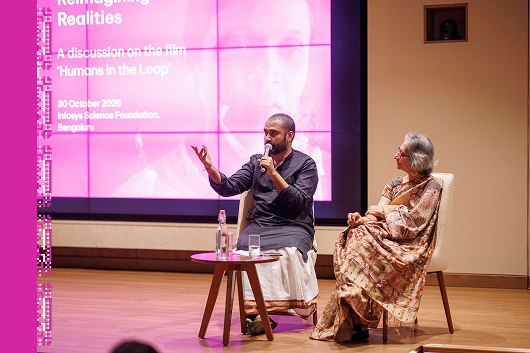
Reimagining Realities: A discussion on the film ‘Humans in the Loop’
30 October 2025
‘Humans in the Loop’ stirred the imaginations of millions with its thoughtful provocations on labor and Indigenous knowledge in the AI sphere. Our event featured the film’s director, Aranya Sahay, in conversation with renowned feminist scholar Prof. Usha Raman to reflect on questions of AI, gender, and work, and to explore how storytelling can open new perspectives on digital futures. They were joined by Uma Mahadevan Dasgupta, Additional Chief Secretary and Development Commissioner, Government of Karnataka, who shared her insights.
Watch the highlights here.
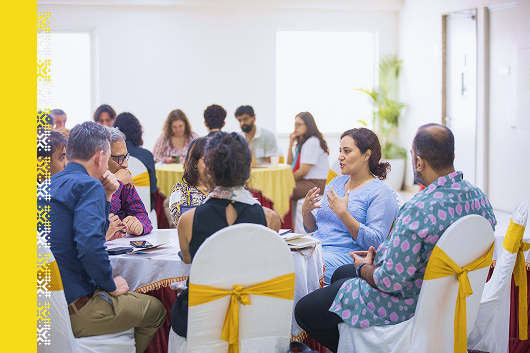
Towards Regenerative AI: Frames for Inclusive, Indigenous, and Intentional Innovation
31 October - 1 November 2025
What would a just, inclusive, and sustainable AI economy look like? This two-day global dialogue was an official Pre-Summit Event of the India-AI Impact Summit 2026. It convened around 50 researchers, practitioners, and policymakers from India, the EU, and beyond to chart pathways for regenerative AI grounded in inclusivity, indigenous knowledge, and intentional design.
Read a synthesis of the insights from the conference here.
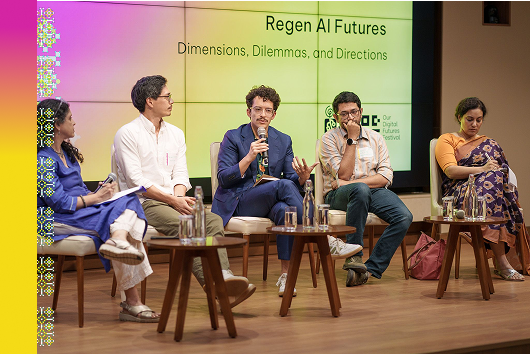
Regen AI Futures: Dimensions, Dilemmas, and Directions
31 October 2025
An official Pre-Summit Event of the India-AI Impact Summit 2026, this panel featured policymakers, AI scholars, and public technologists in conversation with each other on the dilemmas and possibilities of regenerative AI.
Check out the highlights from the panel here.
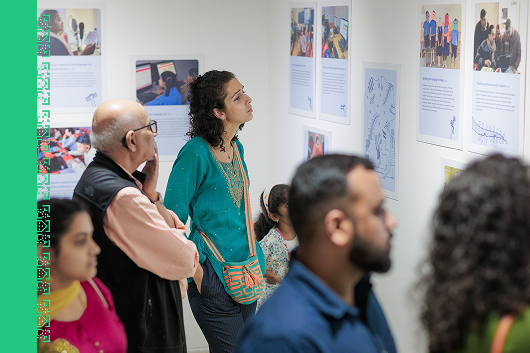
From Fields to Futures: 25 Years of Digital Empowerment
25 October 2025
This photo exhibition documented 25 years of digital ecosystem building — from women-led information centers to inclusive education programs that put people at the heart of technology.
View the gallery here: Gender & Technology and EdTech.

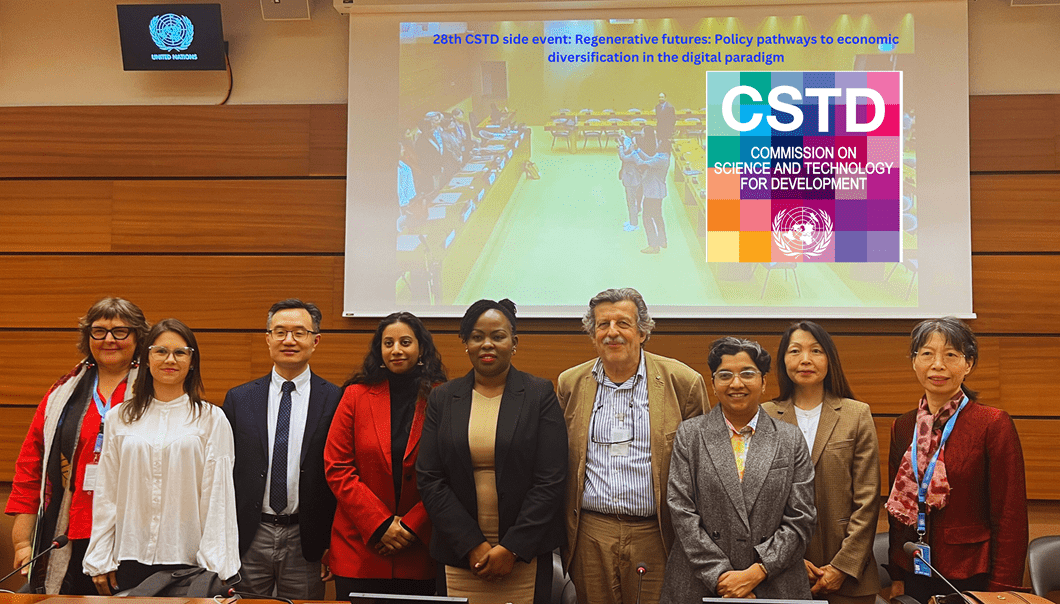
28th session of the UN Commission on Science and Technology for Development (CSTD)
7 - 8 April 2025
Our Deputy Director and Fellow - Research & Policy Engagement, Nandini Chami, contributed to discussions on diversifying economies in a world of accelerated digitalization. Nandini also spoke at a side event on regenerative futures, co-organized by IT for Change and the Global Digital Justice Forum.
Read more details here.

Shiksha Sangam 2025: Where Ideas Converge for Educational Excellence
30 April 2025
Gurumurthy Kasinathan, Director and Lead - Public EdTech, participated in this conference in Jharkhand, organized by the Jharkhand Education Project Council (JEPC), Government of Jharkhand, and Collectives for Integrated Livelihood Initiatives (CInI).
Speaking on a panel on 'Government and Practitioners’ Perspectives on Effective Strategies Across States', Gurumurthy highlighted the role of audio story resources in supporting early childhood language education and in community engagement.
Read more details here.
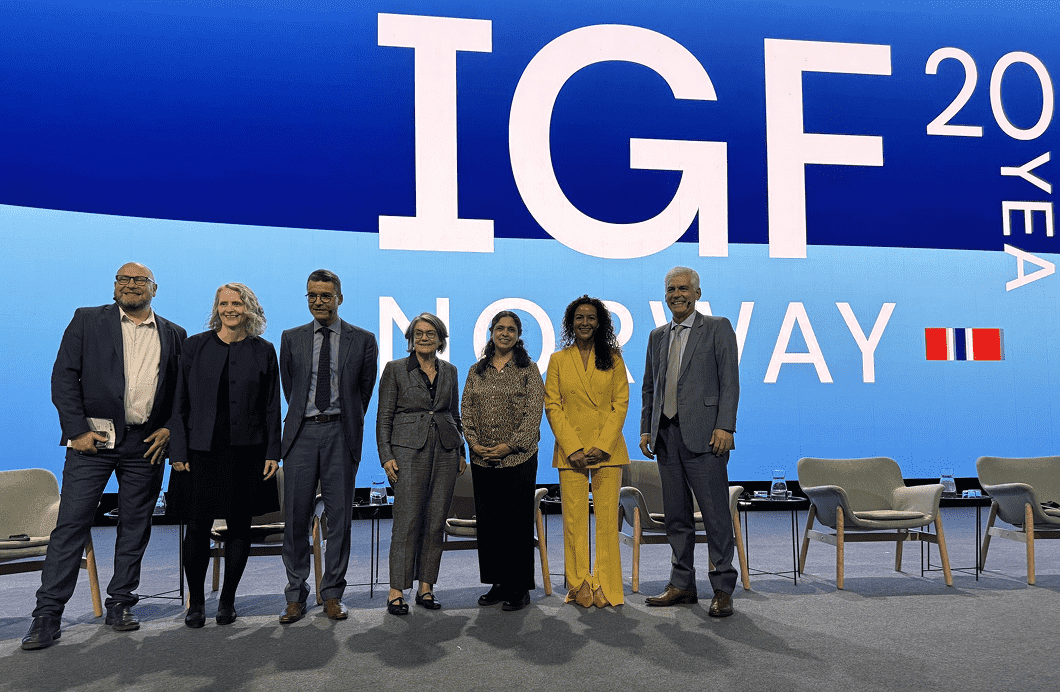
Internet Governance Forum (IGF) 2025
23-27 June 2025
We brought a Global South perspective to the Internet Governance Forum in Lillestrøm, Norway, participating in high-level policy dialogues and cross-sectoral discussions. Our team participated in four sessions, advancing discourse on digital justice, human rights in digital spaces, strengthening the WSIS+ framework, and building sustainable economies.
Watch our Deputy Director, Nandini Chami, speak at the event ‘Making the WSIS+20 Moment Deliver Digital Rights and Justice.’
Transforming Youth and Adult Learning and Education in the Era of Digitalisation, Algorithms and Artificial Intelligence
24 November 2025
At this event organized by the Asia South Pacific Association for Basic and Adult Education (ASPBAE), Gurumurthy Kasinathan, Director and Lead - Public EdTech, delivered an address on ‘Feminist Perspectives on the Political Economy of AI and the Digital Economy’.
Gurumurthy argued that social media platforms are increasingly functioning as de facto education systems, shaping people’s thinking in ways that can often be deeply harmful to society. Referring to IT for Change’s pilot work on using AI for language education in government schools, as well as its community-based work in Mysuru, he underscored the need to explore further the design of social media platforms for public good that can support adult education and empowerment.
Read more here
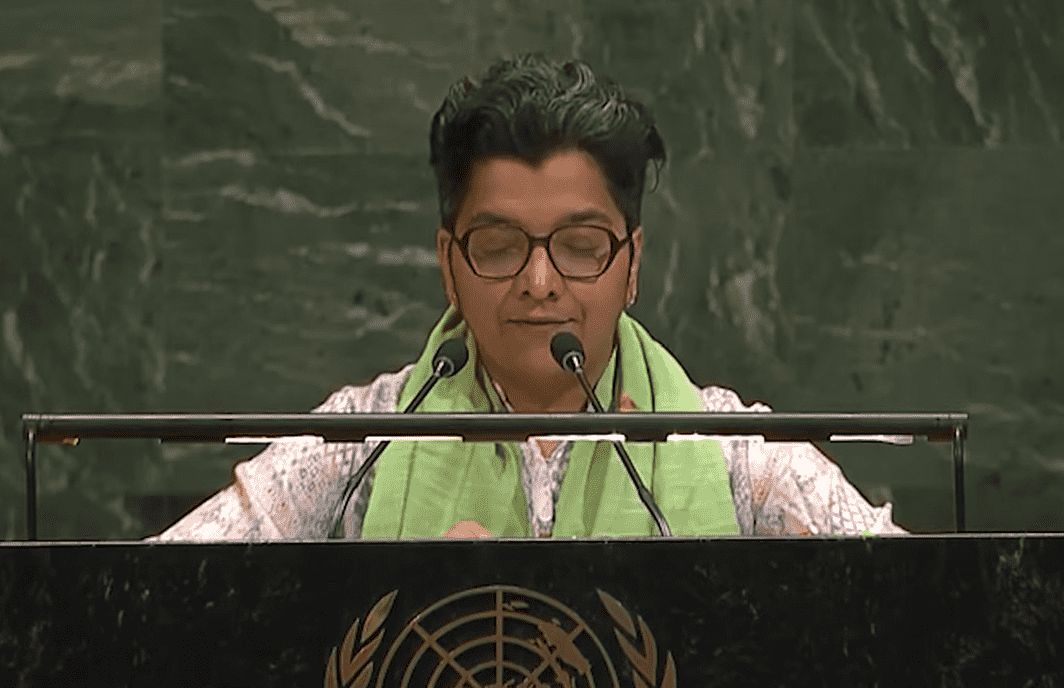
World Summit on the Information Society (WSIS)
15 December 2025
At the High-level Meeting on the overall review of the implementation of the outcomes of the World Summit on the Information Society (WSIS+20), our Deputy Director, Nandini Chami, represented IT for Change to address the 68th Plenary meeting, 80th session of the United Nations General Assembly in New York.
Watch Nandini’s Plenary address here.
‘Financing Digital Innovation Ecosystems in the Majority World’ was a side event organized by the Global Digital Justice Forum, represented by IT for Change and the Association for Progressive Communications (APC), in partnership with UNDP and Co-Develop. The session aimed to address questions around the financing frameworks that have guided the WSIS implementation, centering public accountability and public value in financing digital innovation infrastructures, and the financing architectures needed for equitable and inclusive innovation futures.
Learn more about the event here.
The event report can be accessed here.
India AI Impact Summit
16 - 21 February 2026
Fortifying our contributions to the national policy discourse on AI, we participated in three consultations organized by the Chairs of the Working Groups on the themes of Human Capital, Resilience, Innovation and Efficiency, and Democratizing AI Resources.
We also organized three key sessions, ‘Cultural Rights, Innovation, and Development in the AI moment: Towards a Public Domain Framing,' Steering DPI & AI Innovation Towards Public Value Maximisation: The Role of Governments in Safeguarding Data Agency', and ‘AI Governance from the South: Red Lines to Baselines’. The latter built on the framework of ‘ReGenAI: A New Deal for the AI Economy’, which calls for a structural reorientation of the AI paradigm toward meaningful and dignified work, diversified economies, pluralistic knowledge societies, and planetary flourishing.
We also participated in six sessions on decentralized data, AI governance, and equitable AI, amongst others.
Read more about our participation here.
The Essential IT for Change Resource List: 2025-26
PROGRAM AND RESEARCH OUTPUTS
Technology Integration for Equitable Education Program Report 2023-25, IT for Change
Beyond Magic Bullets: Reclaiming the Digital Promise for MSMEs, Deepti Bharthur
There’s no ghost in the machine!, Sadhana Sanjay, Nandini Chami, Saloni Mishra, and Madhulika T
K-LEAP Impact Assessment Report, Vivek Nair, Anusha Sharma, and Marzia Ibrahim
POLICY BRIEFS
Why a cross-track approach is necessary to steer the work of the CSTD Working Group on Data Governance, Anita Gurumurthy
Designing an effective data-sharing framework for AgriStack, Anita Gurumurthy, Nandini Chami, and Rudraksh Lakra
Submissions to the UN CSTD Working Group on Data Governance, IT for Change
Response to the USTR’s Request for Comments on Significant Foreign Trade Barriers for the 2026 National Trade Estimate Report, IT for Change
POLICY BRIEFS (CONTINUED)
Zero draft of the WSIS+20 Outcome Document: Comments from the Global Digital Justice Forum, Global Digital Justice Forum
Joint Statement on the ILO’s Brown Report on the Platform Economy, TEDIC, Paraguay, Privacy International, Fairwork, Argentina, Médecins du Monde France, Equidem, IT for Change, Human Rights Watch, Maison des Livreurs – Bordeaux, and Coopcycle-Association: Maison des Coursiers – Paris
Submission on the Draft Amendments to the Information Technology Rules, 2021, Relating to Synthetically Generated Information, IT for Change
The Invisible Layer: Protecting Data Workers in Global AI Value Chains, Sadhana Sanjay, Fasica Gebrekidan, Srravya Chandhiramowuli, and Mohammad Amir Anwar
Recentring Communities: A Participatory Approach for Connectivity, Viraj S Desai, Anuradha Ganapathy, and Becky Faith
Joint Submission to the Call for Input on the EMRTD’s Study on ‘Artificial Intelligence, Cultural Rights, and the Right to Development’, IT for Change, Global Digital Justice Forum
MEDIA ARTICLES
All the Rightful Inheritors of the Classroom, Anusha Hegde
Is Facial Recognition Technology Necessary In Our Schools?, Anusha Sharma
Analyzing the India-UK FTA: Is India Giving Up Its ‘Digital Sovereignty’ Dream? Rishab Bailey, Shobhit S., and Sadhana Sanjay
When Teachers Learned the Art of Writing, Gurumurthy Kasinathan
JOURNAL ARTICLES
Digital Technologies For Equitable Quality Education, Gurumurthy Kasinathan and Susan Sreemala
PODCASTS
Nan Voice Nan Choice Hosa Hejje Hosa Dishe, IT for Change
Financial Statements
BALANCE SHEET AS ON 31 MARCH 2026
All amounts are in INR
| 2024-25 | Liabilities | 2025-26 | % of total | 2024-25 | Assets | 2025-26 | % of total |
|---|---|---|---|---|---|---|---|
| 869,369 | Corpus Fund | 1,580,955 | 1% | 47,954,083 | Fixed Assets | 55,064,160 | 21% |
| 33,347,915 | General Fund | 65,685,412 | 24% | 10,223 | Non Current Assets | 12,293 | 0% |
| 22,276,465 | Organization Stabilization Fund | 0 | 0% | 152,688,193 | Current Assets, Loans and Advances | 209,772,041 | 78% |
| 47,954,083 | Asset Fund | 55,064,160 | 21% | 2,132,411 | Receivables | 3,639,182 | 1% |
| 95,700,767 | Advance Account | 140,784,318 | 52% | ||||
| 2,636,311 | Sundry Payables | 5,372,831 | 2% | ||||
| 202,784,910 | Total | 268,487,676 | 100% | 202,784,910 | Total | 268,487,676 | 100% |
INCOME AND EXPENDITURE ACCOUNT FOR YEAR ENDED 31 MARCH 2026
All amounts are in INR
| 2024-25 | Expenditure | 2025-26 | % of total | 2024-25 | Income | 2025-26 | % of total |
|---|---|---|---|---|---|---|---|
| 56,883,389 | Personnel Costs | 60,497,391 | 60% | 74,490,962 | Funds Received | 86,765,864 | 86% |
| 13,525,856 | Operating Costs | 20,765,949 | 21% | 10,292,112 | Interest on Term Deposit and Savings Bank Account | 11,908,883 | 12% |
| 4,081,717 | Administration Costs | 5,502,524 | 5% | 869,481 | Income to the extent of Depreciation transferred from Asset fund | 1,050,887 | 1% |
| 869,481 | Depreciation | 1,050,887 | 1% | 0 | Withdrawal from Asset Fund | 51,478 | 0% |
| 0 | Loss/Gain on Disposal of Asset | 51,479 | 0% | 0 | Donation | 2,916 | 0% |
| 6,974,307 | Excess of Income over Expenditure | 13,411,804 | 13% | 1,637,502 | Professional Fee and Other Income | 1,500,005 | 1% |
| 6,974,307 | Appropriation towards Organizational Expenses | 0 | 0% | 2,019,000 | Write Back of Provisions no Longer Required | 0 | 0% |
| 89,309,057 | Total | 101,280,034 | 100% | 89,309,057 | Total | 101,280,034 | 100% |
The IT for Change Social Report
Programming, Monitoring, Evaluation, and Learning
Impact Footprint
Our Work Out in the World